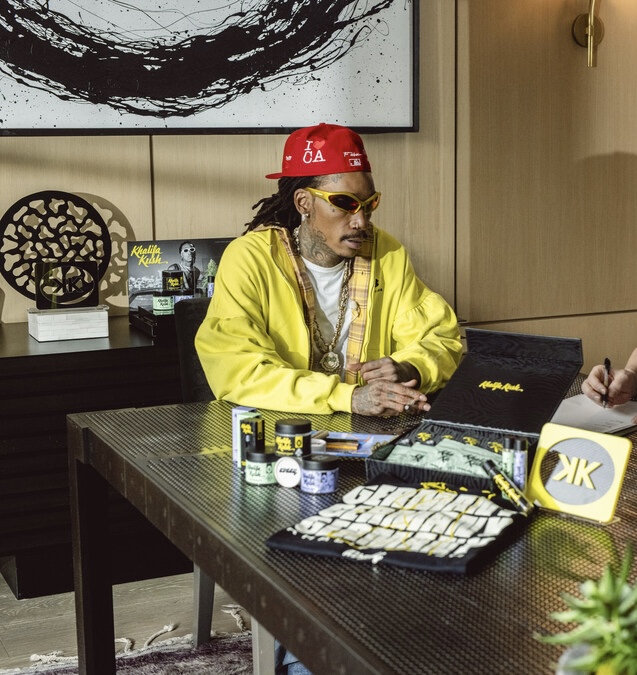
Even the most successful celebrity cannabis brand generates less than $70 million annually in a U.S. cannabis industry now worth more than $30 billion.
Celebrity cannabis brands dominate headlines across the legal weed industry. Rappers, athletes and entertainers have launched dozens of brands in recent years, turning cannabis into one of the most culturally visible sectors connected to hip hop and entertainment.
But the numbers reveal a very different economic reality.
Combined revenue from the Top 20 celebrity cannabis brands is estimated between $225 million and $316 million annually, according to data compiled by Hoodie Analytics and published in a celebrity cannabis industry ranking.
That figure represents only a small fraction of the legal cannabis economy.
The U.S. cannabis market now generates more than $30 billion in annual sales, meaning celebrity brands account for roughly one percent of the industry.
Khalifa Kush Leads the Celebrity Cannabis Market
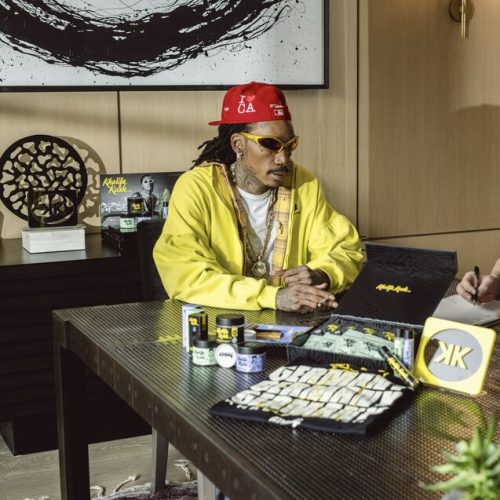
Among celebrity cannabis brands, rapper Wiz Khalifa continues to dominate the category.
Khalifa Kush generated an estimated $55 million to $65 million in annual sales in 2025, maintaining its position as the highest revenue celebrity cannabis brand.
Comedy icons Cheech Marin and Tommy Chong follow with Cheech and Chong’s Cannabis Co., which generates roughly $30 million to $40 million annually.
Garcia Hand Picked, a cannabis brand inspired by Grateful Dead co founder Jerry Garcia, ranks among the top performers with estimated sales between $25 million and $35 million.
These brands show how celebrity influence can translate into strong consumer demand in dispensaries across legal cannabis markets.
However the numbers also highlight how small celebrity brands remain compared to the overall cannabis economy.
93 Boyz Shows Strong Growth in Illinois
One of the most notable performers in the celebrity cannabis category is Chicago rapper Vic Mensa and his brand 93 Boyz.
The company generated an estimated $14 million to $19 million in annual sales in Illinois.
Illinois is one of the largest cannabis markets in the country, generating roughly $1.7 billion in annual cannabis sales.
That means 93 Boyz represents close to one percent of the entire Illinois cannabis market despite operating primarily within a single state.
The brand’s growth reflects strong retail placement and cultural authenticity tied to Chicago’s cannabis community.
Black Entrepreneurs Continue Shaping Cannabis Culture
Several other cannabis brands connected to Black founders and advocates also appear in the celebrity cannabis landscape.
TICAL, founded by Method Man, has expanded into multiple legal cannabis markets across the United States.
Highsman, created by former NFL running back Ricky Williams, also operates in several state markets.
Death Row Cannabis, connected to Snoop Dogg, continues expanding its brand footprint through partnerships with licensed cannabis operators.
These brands demonstrate how hip hop culture and sports figures continue influencing cannabis entrepreneurship and public perception.
Some Celebrity Cannabis Brands Are Losing Momentum
While some celebrity cannabis brands are growing, others have begun to lose ground.
Data from Hoodie Analytics shows several brands posting declining revenue ranges in recent rankings.
Brands such as Tyson 2.0, 22Red, Viola, Highsman and Primitiv all reported lower estimated sales compared to the previous year.
The shift reflects increasing competition within legal cannabis markets where shelf space inside dispensaries is limited and new brands appear constantly.
As legalization spreads across the country, celebrity cannabis brands must compete with thousands of other products for visibility and consumer loyalty.
Retail and Infrastructure Still Control the Industry
Despite the cultural influence of celebrity cannabis brands, the economic power of the cannabis industry largely remains with companies that control cultivation, manufacturing and retail infrastructure.
Large vertically integrated operators produce cannabis products, distribute them to dispensaries and often operate retail stores themselves.
One example is STIIIZY, which has become the highest revenue cannabis brand in the United States while also operating dozens of dispensaries across major legal markets.
These companies dominate the industry because they control production, distribution and retail shelf space.
Celebrity brands may drive cultural attention and consumer excitement, but the companies managing infrastructure still capture most of the industry’s revenue.
What the Future Holds for Celebrity Cannabis
The celebrity cannabis category is likely to continue evolving as the legal cannabis industry expands.
Artists and athletes will continue launching brands that tap into culture, identity and fan communities.
However long term success will likely depend on more than celebrity influence.
Brands that combine cultural credibility with strong retail partnerships and distribution networks will have the best chance to grow.
For Black entrepreneurs and artists entering the cannabis industry, the challenge will be turning cultural influence into sustainable business infrastructure within a market that continues to scale rapidly.
Black Cannabis Magazine is your go to platform for cannabis culture news and lifestyle content with a focus on diversity and inclusion. For more information visit www.blackcannabismagazine.com.
Copyright 2026 Black Cannabis Magazine. Distributed by Hazey Taughtme LLC.