
May 11, 2021


← Back to The Cannabis Strain Encyclopedia
Part of the Cannabis Strain Encyclopedia, a series documenting the strains that shaped modern cannabis genetics.
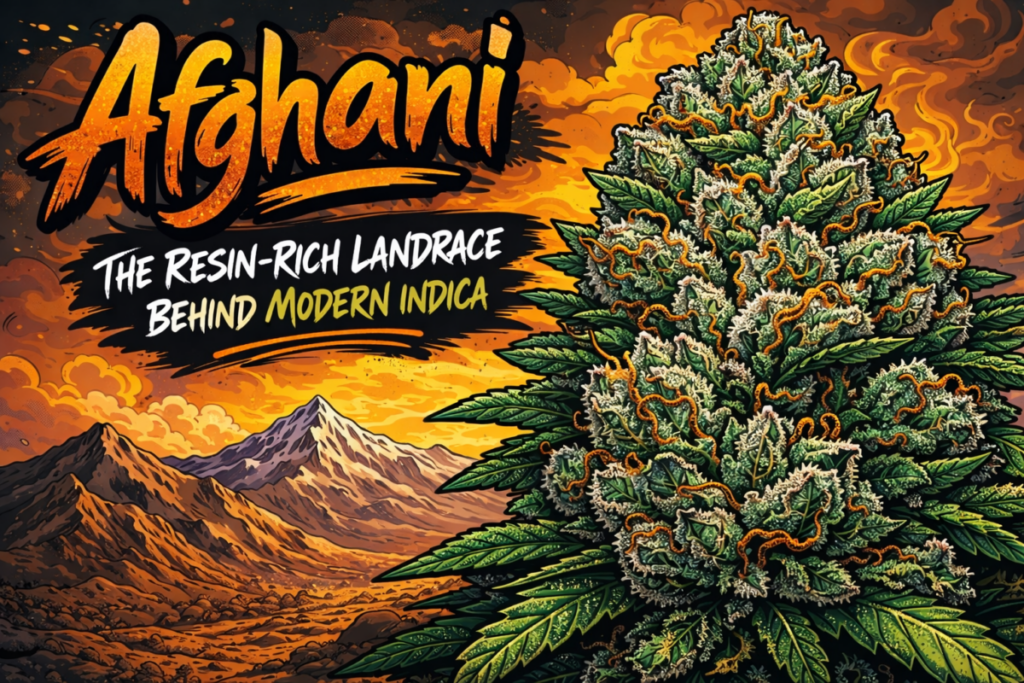 Origins of Afghani
Afghani strain is one of the most important landrace cannabis varieties in the world. It developed naturally in Afghanistan, where cannabis has been cultivated for centuries for resin production and traditional hashish-making. In the dry mountain valleys and rugged terrain of the region, farmers selected plants that produced dense flowers, thick trichome coverage, and rich aromatic resin.
These conditions helped shape Afghani into a hardy, compact indica with the traits now associated with classic hash plants. Its dense bud structure and heavy resin output made it especially valuable in traditional cannabis culture long before modern hybrid breeding began.
Afghani became a cornerstone of modern cannabis breeding when landrace seeds from Afghanistan reached Europe and North America in the 1960s and 1970s. Breeders quickly recognized its value. The plant offered stability, short flowering times, dense bud formation, and strong resin production, making it ideal for indoor growing and hybrid development.
Many of the indica traits seen in modern cannabis can be traced back to Afghani genetics. Alongside Hindu Kush, Durban Poison, Thai, Colombian Gold, and Panama Red, Afghani stands as one of the foundational landrace strains that shaped the modern cannabis gene pool.
Its influence can still be seen in countless indica and indica-leaning hybrids sold today.
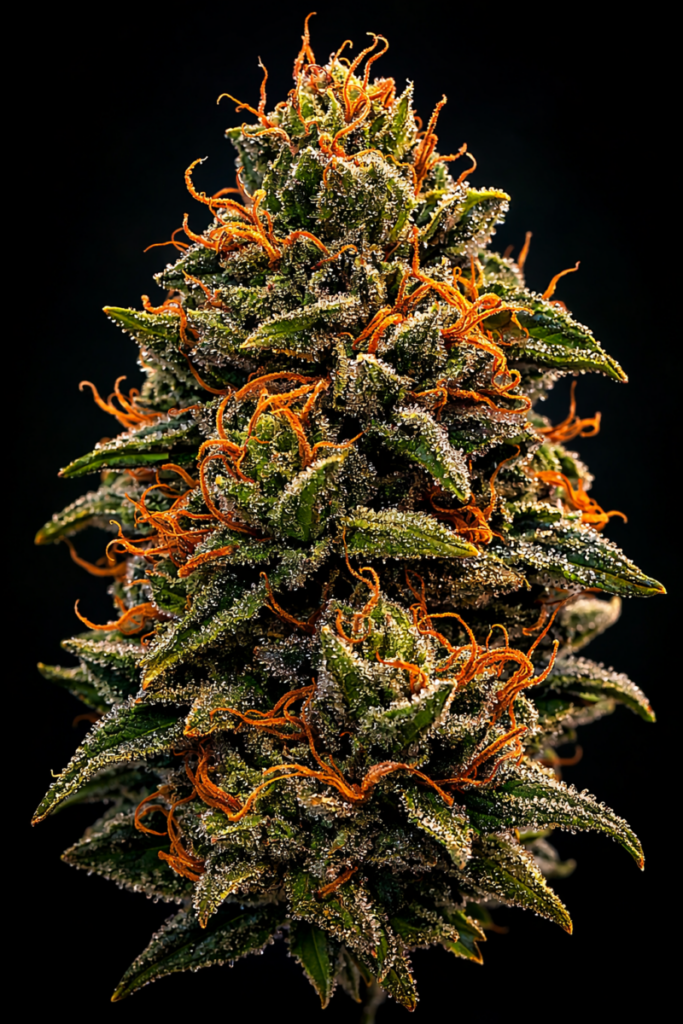
Afghani plants are known for their short, bushy growth and tightly packed buds. The flowers are typically dense and resin-heavy, with dark green coloration, bright orange pistils, and a frosted layer of trichomes. These visual traits reflect the plant’s long adaptation to harsh mountain climates where heavy resin production helped protect the flowers.
Because of this resin-rich structure, Afghani became one of the most important source plants for hashish production and a key reference point in cannabis breeding.
Afghani is known for deep earthy aromas often layered with notes of spice, wood, musk, and sweet hash. Many growers and longtime cannabis consumers associate the strain with the classic smell of old-school indica.
That rich aromatic profile helped shape the flavor direction of many later Kush and hash plant hybrids. Even today, strains with heavy earthy or hash-forward terpene profiles often trace some of that expression back to Afghan genetics.
Afghani occupies a central place in the genetic history of cannabis. As a stable landrace variety, it contributed many of the structural and resin-producing traits that breeders sought when building modern hybrids. Its compact size, dense flowers, and fast flowering time made it especially useful in controlled indoor environments.
Breeders throughout the 1970s and 1980s used Afghani genetics to strengthen hybrid lines and introduce dependable indica characteristics. That influence helped shape many of the foundational strains that followed.
Because of its role in breeding, Afghani remains one of the most important landrace strains for understanding how modern cannabis evolved.
Afghani represents a direct connection to traditional cannabis cultivation in one of the plant’s most important historic regions. Long before the rise of dispensaries, branded strains, and global cannabis markets, Afghan farmers were growing resin-rich plants for hashish that would later influence cannabis culture around the world.
The strain remains a symbol of old-world cannabis heritage and the deep agricultural knowledge that existed long before commercial breeding transformed the plant into thousands of modern hybrids.
Even in an era dominated by flashy names and boutique genetics, Afghani still matters because it helped build the framework for modern indica breeding. Its resin production, plant structure, and reliability made it one of the most useful landrace strains ever introduced into global cannabis cultivation.
For breeders, historians, and cannabis enthusiasts alike, Afghani remains one of the clearest examples of how traditional landrace genetics continue to shape the plant today.
These foundational cannabis varieties evolved naturally in specific regions of the world and helped shape modern cannabis genetics.
Explore the Full Cannabis Strain Encyclopedia
Part of the Cannabis Strain Encyclopedia by Black Cannabis Magazine.
