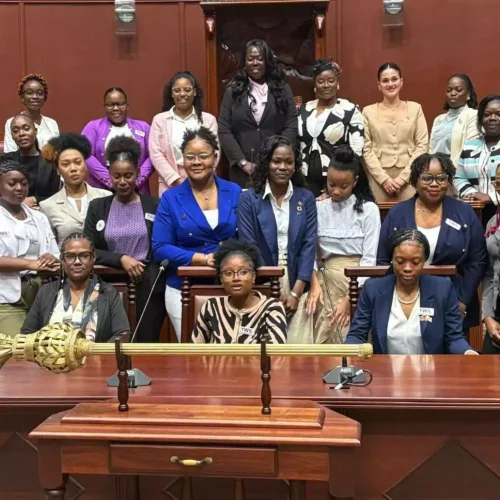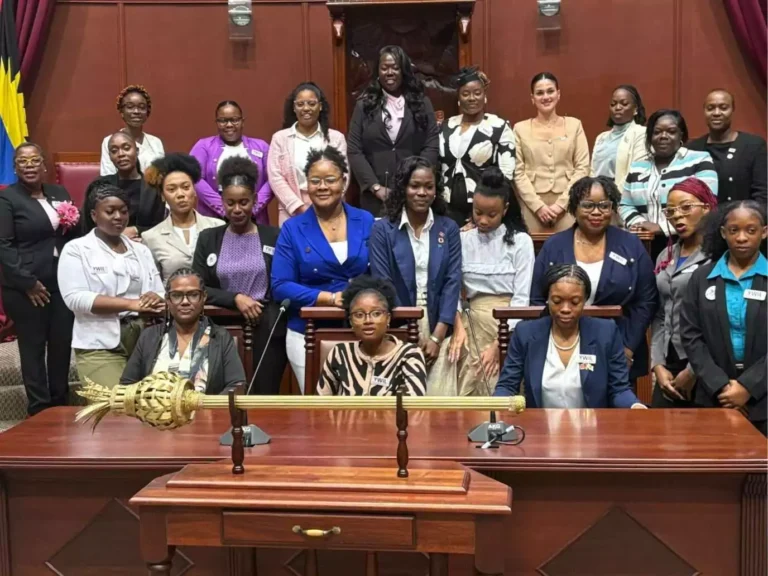
A group of young women stepped into Antigua and Barbuda’s Parliament this week and sparked a national conversation about cannabis policy.
Their message was clear. Reform is not finished. And the next generation is watching closely.
The debate happened during a special parliamentary sitting organized through the Young Women in Leadership (YWIL) programme, which trains emerging female leaders in governance and public policy.
Participants took on roles normally held by elected officials. They debated a motion proposing a joint select committee to review the country’s cannabis legislation.
The moment was symbolic but also serious. Many of the arguments mirrored real debates happening across the Caribbean.
Young Leaders Question Cannabis Policy Implementation
During the debate, participants argued that reform must go beyond passing laws.
One speaker, acting in the role of government business leader in the Senate, pushed for deeper oversight. She explained that responsible governance requires monitoring how laws affect citizens after they pass.
The argument reflected a growing reality across the cannabis world. Passing legislation is only the beginning.
Many countries and U.S. states still struggle with implementation. Licensing delays, unclear regulations, and public confusion often follow legalization or decriminalization.
The young leaders said Antigua may be facing similar issues.
Public Confusion Around Cannabis Laws
One of the most powerful points raised during the debate focused on public misunderstanding.
Some participants argued that many citizens believe cannabis has been fully legalized.
That belief has created visible consequences in communities and schools.
According to speakers in the chamber, some young people are experimenting with cannabis as early as age eleven. Many do not fully understand the legal status of the plant.
This confusion is not unique to Antigua.
Across the United States and Caribbean, governments have struggled to communicate the difference between decriminalization, medical legalization, and full adult-use legalization.
When those distinctions blur, communities often feel the impact first.
Small Island Communities Experience Policy Differently
Another participant representing Barbuda highlighted a key issue often overlooked in national policy debates.
Small island communities experience laws differently.
Cannabis legislation may create economic opportunities in some regions while creating social challenges in others.
Rural communities, youth populations, and low-income households often carry both the risks and the potential benefits of cannabis reform.
Speakers emphasized that any review of the law must include these perspectives.
Ignoring those differences could create policies that work on paper but fail in real communities.
A Missing Government Report Raises Questions
The debate also touched on a major political controversy.
A government-appointed committee previously studied the impact of cannabis decriminalization in Antigua.
That committee reportedly produced a 150-page report submitted to the Cabinet in 2025.
However, according to participants familiar with the process, none of the recommendations have been implemented.
Some critics say the report has effectively disappeared from the legislative process.
That allegation has sparked frustration among observers who expected meaningful reforms following the study.
Calls for transparency are growing.
The young women participating in the parliamentary session said reviewing that report should be part of any new committee’s work.
Caribbean Cannabis Reform Is Still Evolving
Antigua and Barbuda decriminalized small amounts of cannabis in 2018. The country also legalized limited cultivation for personal and religious use.
The reforms were seen as a major shift for the Caribbean nation.
They were influenced by growing global acceptance of cannabis and pressure to address the legacy of prohibition.
Still, full legalization has not happened.
Commercial cannabis markets remain limited across much of the Caribbean.
Countries like Jamaica and St. Vincent have moved further into medical cannabis industries, while others remain cautious.
The debate inside Antigua’s Parliament shows the conversation is far from over.
The Next Generation Is Paying Attention
For Black and Caribbean cannabis culture, the moment carries deeper meaning.
Cannabis has always been tied to youth movements, music, and cultural identity across the region.
From reggae to hip-hop, the plant has shaped global conversations about freedom, spirituality, and resistance.
Now the next generation is bringing that conversation directly into political spaces.
Programs like YWIL are giving young women the opportunity to understand governance before entering public life.
For many observers, the debate signals something bigger than a student exercise.
It suggests that the future leaders of Antigua and Barbuda are already thinking critically about cannabis policy.
And they are not afraid to challenge how it works.
Why This Matters for Cannabis Policy
The debate highlights a broader issue facing cannabis reform worldwide.
Passing laws is easier than implementing them.
Governments must address public education, economic opportunity, and social equity at the same time.
Without those pieces, reform can stall.
Young voices are increasingly pushing governments to move faster.
And as this parliamentary session showed, the next generation is ready to ask tough questions about cannabis policy.
The future of legalization may depend on leaders willing to listen.
Black Cannabis Magazine is your go-to platform for cannabis culture, news, and lifestyle content with a focus on diversity and inclusion. For more information, visit www.blackcannabismagazine.com.
Copyright 2026 Black Cannabis Magazine. Distributed by Hazey Taughtme, LLC.