Regulation, not prohibition, takes center stage as Texas charts a new course for hemp
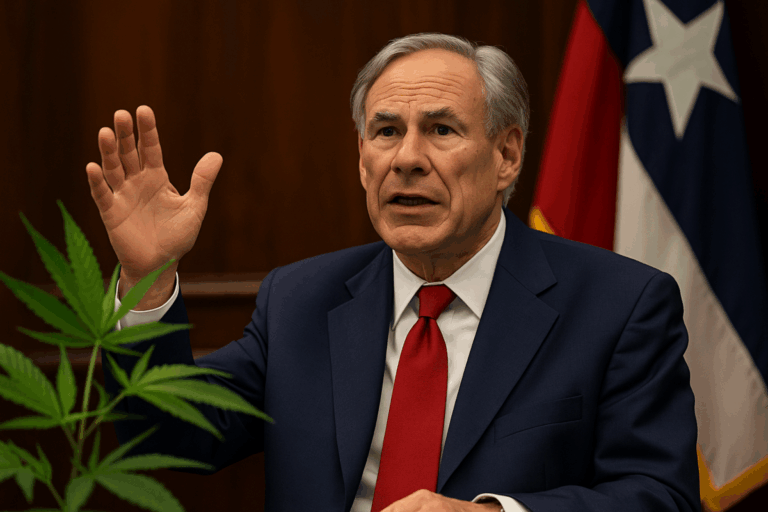
In a late-night political twist just minutes before the veto deadline, Texas Governor Greg Abbott struck down Senate Bill 3—a controversial proposal that would have banned all consumable hemp products containing any form of THC, including delta-8 and delta-9. Abbott’s veto shocked many in the state’s political establishment, especially considering he had stayed silent throughout the legislative session. But his follow-up announcement—calling lawmakers back for a special session focused on hemp regulation—made one thing clear: Texas isn’t banning THC. It’s preparing to control it.
Why the Veto Matters
Senate Bill 3 was the centerpiece of Lt. Governor Dan Patrick’s crusade to outlaw hemp-derived THC products, which have become widely available across Texas since a 2019 loophole. Patrick spent months publicly targeting cannabis retailers, filming videos in stores and painting THC-infused products as a public health hazard.
But Abbott wasn’t convinced. Instead of echoing a prohibition-era strategy, he cited constitutional concerns and pushed for sensible regulation that aligns with federal law. In his own words, the bill would have “put federal and state law on a collision course.” Rather than risk a costly and lengthy court battle, he pulled the plug.
And then he flipped the narrative. Just after vetoing SB 3, Abbott called a special legislative session to start July 21, placing hemp regulation at the top of the agenda. This move is a win for the state’s growing hemp economy—and a major loss for Patrick’s hardline approach.
Regulation Over Rejection
Abbott’s decision highlights a clear shift in tone: Texas is choosing oversight over outright bans. The governor’s proposed path includes barring THC product sales to minors, implementing mandatory testing during production, giving cities the right to opt out, and dedicating funding to law enforcement for enforcement.
It’s a regulatory playbook similar to how Texas handles alcohol—creating systems that control access while maintaining public safety. For cannabis entrepreneurs, this pivot could signal the beginning of a more stable operating environment—one that protects the legal market while pushing out bad actors.
The Political Chessboard
Abbott’s stance put him in direct conflict with Lt. Gov. Patrick, one of the state’s most powerful Republicans. Patrick blasted the veto on social media, claiming it left law enforcement and families vulnerable and ignored those “who poured their hearts out on their tragic losses.” He was clearly blindsided—and now politically exposed.
Patrick’s opposition to hemp is part moral crusade, part culture war. He repeatedly described THC products as “poison” during press conferences and even suggested banning them was one of his “top five” goals this session. But Abbott took a more pragmatic approach, pushing for constitutionally sound, enforceable policy instead of emotional reactionism.
Industry Pressure Made an Impact
The veto didn’t happen in a vacuum. The Texas hemp industry mobilized fast and hard, launching a campaign that framed SB 3 as not only unconstitutional, but also harmful to the economy and public health. Veterans, chronic pain sufferers, and even some conservatives joined the push, arguing that banning THC would drive consumers to the illicit market and limit access to products many rely on for relief.
The numbers didn’t lie. Texas’ hemp industry is booming—employing more than 50,000 people and generating an estimated $8 billion in annual tax revenue. With over 8,000 retail locations and a consumer base spanning medical patients to wellness seekers, the infrastructure is already in place. Lawmakers were forced to reckon with the reality that banning THC wasn’t just unpopular—it was economically reckless.
The Bigger Picture: Federal Tension and Future Fights
At the heart of this fight is a legal paradox. The 2018 Farm Bill federally legalized hemp and its derivatives, but didn’t clearly outline rules for all forms of THC. That gray area has allowed states to interpret—and regulate—the industry in wildly different ways.
In Texas, the original 2019 legislation created a loophole that allowed THC-adjacent products to flood the market. SB 3 was an attempt to slam that door shut. Abbott’s veto keeps the door open—but now calls for a lock, key, and security system to monitor who comes in and out.
The decision puts Texas in line with states that have adopted nuanced approaches to hemp. Instead of criminalizing cannabinoids, those states focus on testing, packaging, age limits, and enforcement—tools Abbott says Texas should now adopt. The goal isn’t to eliminate THC, but to manage it like any other legal product.
Medical Cannabis Expansion Softens the Blow
To balance things out, the Legislature quietly expanded Texas’ medical marijuana program this session. Lawmakers broadened the list of qualifying conditions, approved more dispensaries, and relaxed regulations on operators. It’s a subtle nod to changing times—and a clear signal that even conservative Texas is warming up to cannabis.
What’s Next for Texas Hemp
The special session starting July 21 will be a political battleground. Expect intense debates between prohibitionists like Patrick and regulation advocates who want to bring structure to the chaos. Abbott has made it clear: the current market is underregulated and puts kids at risk. But banning everything isn’t the answer.
For now, retailers, cultivators, and consumers can breathe a sigh of relief. The ban is dead. But regulation is coming, and the industry will need to adapt fast. Packaging, testing, licensing, and enforcement will likely take center stage in the next version of whatever law is passed.
Abbott didn’t just veto a bill—he opened the door to a broader, smarter conversation. And for Texas’ cannabis industry, that might be the best thing to happen in years.
Black Cannabis Magazine is your go-to platform for cannabis culture, news, and lifestyle content with a focus on diversity and inclusion. For more information, visit www.blackcannabismagazine.com.
Copyright 2025 Black Cannabis Magazine. Distributed by Hazey Taughtme, LLC.