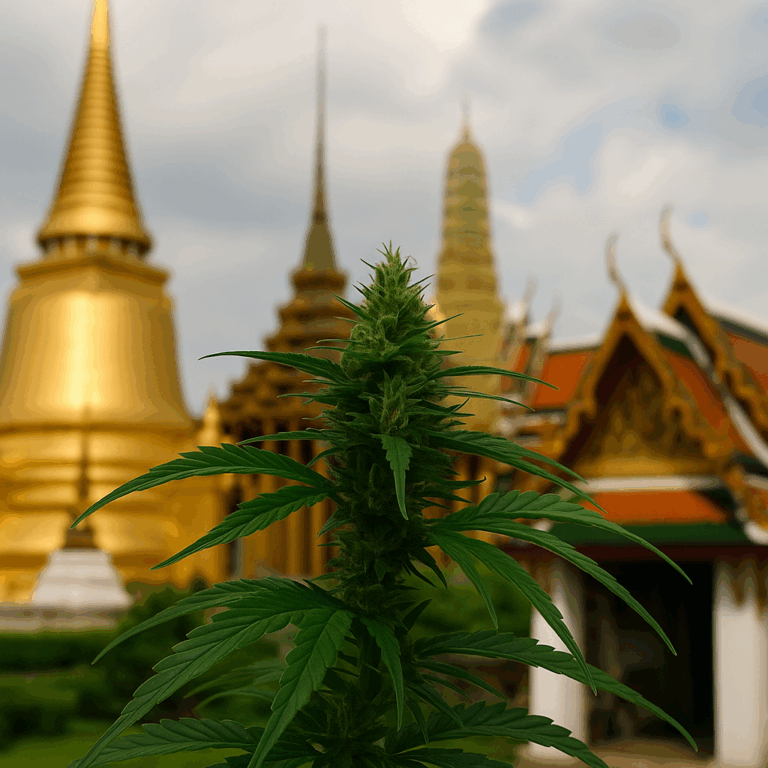
Thailand was once on track to become the Amsterdam of Asia. With cannabis decriminalized in 2022, the country opened the floodgates to weed tourism — dispensaries were booming, and tourists flocked in for legal bud. But just three years later, the plug is being pulled. As of June 23, 2025, cannabis is officially back on the controlled substances list, and a nationwide shift is underway to end recreational sales and turn dispensaries into government-regulated clinics.
The high is over — and the hangover is hitting hard.
From Decriminalization to Regulation
Back in 2022, Thailand shocked the region by becoming the first Asian country to decriminalize cannabis. At the time, there were no clear laws governing cannabis sales, and that legal grey area created a free-for-all. With little oversight, cannabis culture exploded. Over 18,000 weed shops popped up across the country, selling everything from joints to infused edibles — no medical card needed.
But the lack of regulation soon backfired. Complaints from the public, schools, religious groups, and health officials began piling up. What started as a progressive move toward plant-based healing turned into an unregulated marketplace with rising youth access and widespread recreational use.
The Thai government has now responded with the strictest overhaul to date, promising to convert the cannabis economy into a licensed medical model by the end of 2025.
The Clinic Conversion Plan
According to Thailand’s Ministry of Public Health, only about 2,000 of the 18,000 existing dispensaries will survive the transition. The rest will likely close shop as new regulations demand every cannabis business become a certified medical clinic with a licensed doctor on site.
Dr. Somlerk Jeungsmarn, head of the Department of Thai Traditional and Alternative Medicine, said most businesses simply can’t meet the new requirements. The restructuring aims to make cannabis a strictly medical treatment — no more recreational loopholes.
Here’s what’s changing:
-
Mandatory Doctor on Site: Every shop that wants to stay open must hire a licensed medical professional — one of seven approved types — who can legally write cannabis prescriptions.
-
Standardized Prescription Forms: Customers will need a medical consultation and a valid Phor Thor 33 form — the same nationwide document used across all health sectors — before buying anything cannabis-related.
-
Sales Tracking: Monthly reports on sales and prescriptions must be submitted to Thai authorities beginning this July.
-
Stricter Enforcement: Officials have already inspected 1,565 shops since the new rules were announced, suspending 82 licenses, closing 322 shops, and pursuing seven prosecutions.
It’s not just a policy shift — it’s a full-on weed industry reset.
The Prescription-Only Model
Tourists once treated Thailand like a cannabis buffet. That era is over.
Under the new Controlled Herbs Announcement (Cannabis) BE 2568, cannabis will only be available to patients with a valid prescription. That prescription must come from a Thai practitioner trained and certified in cannabis-based treatment.
No more walk-ins. No more vacation highs. No more cheeky weed signage. If you’re a tourist and not sick — you’re out of luck.
The government is even exploring telemedicine as an option to improve access to doctors, but that process will still require verification and registration, making it nearly impossible for casual visitors to participate.
What Happens to Cannabis Products?
Dispensaries aren’t the only ones getting squeezed — growers and producers now face tighter production and quality standards.
Thailand currently has 69 GACP-certified (Good Agricultural and Collection Practices) plots producing about 71,850 kilograms of cannabis annually. Of that, 24,000 kg gets exported while the rest stays local. Another 51 plots are in line for certification, which could bring annual output to 125,000 kg.
But only cannabis from certified sources can now be stocked in licensed clinics. That means producers must meet strict guidelines, including minimal levels of heavy metals, pesticides, fungi, and microbial contamination. Additionally, THC and CBD content will be tightly regulated.
Training the Workforce
Starting July 16, the ministry will launch a major training campaign:
-
2,000 Doctors will be trained and certified to prescribe cannabis, creating a 10:1 ratio between doctors and the remaining legal shops.
-
100,000 Cannabis Staff will undergo training beginning July 17 to ensure compliance, safe handling, and patient consultation standards.
This effort reflects a total shift in how the cannabis industry will operate — from street-level hustle to state-sanctioned medicine.
What It Means for Tourists
If you were planning to light up in Phuket, Bangkok, or Chiang Mai — think again. Without a Thai-issued medical prescription, access to cannabis is now off the table.
Online orders and vending machine purchases are also banned. The days of easy access, neon-lit shops, and beachside blunts are done. And for those who try to sneak around the rules, the penalty can be up to one year in prison or a $620 fine — with harsher enforcement expected soon.
Thailand is sending a message loud and clear: this isn’t your playground anymore.
Can the Industry Survive?
Cannabis advocates are raising red flags about the practicality of converting a billion-dollar market into a medical-only system. They argue the government is moving too fast, leaving businesses in limbo and threatening jobs in tourism, retail, and agriculture.
But public health officials say the numbers don’t lie. Cannabis use in Thailand jumped from 150,000 to 1.5 million people since decriminalization — a tenfold increase. That growth, they argue, justifies tighter control.
Whether the new model will succeed or collapse under its own weight remains to be seen.
Final Puff
Thailand’s cannabis evolution is a cautionary tale. Going from wild west to over-regulated in just three years shows how quickly policy can swing. What started as a promising model of progressive plant use now serves as a blueprint for what happens when legalization moves faster than regulation.
For the cannabis community, the lesson is simple: legalization is only the beginning. Without structure, enforcement, and purpose, the green rush can turn to ash just as fast.
Black Cannabis Magazine is your go-to platform for cannabis culture, news, and lifestyle content with a focus on diversity and inclusion. For more information, visit www.blackcannabismagazine.com.
Copyright 2025 Black Cannabis Magazine. Distributed by Hazey Taughtme, LLC.